The Presbyterian & Reformed story
A family shaped by the Reformation, God's sovereignty, confessions and leadership shared by elders.
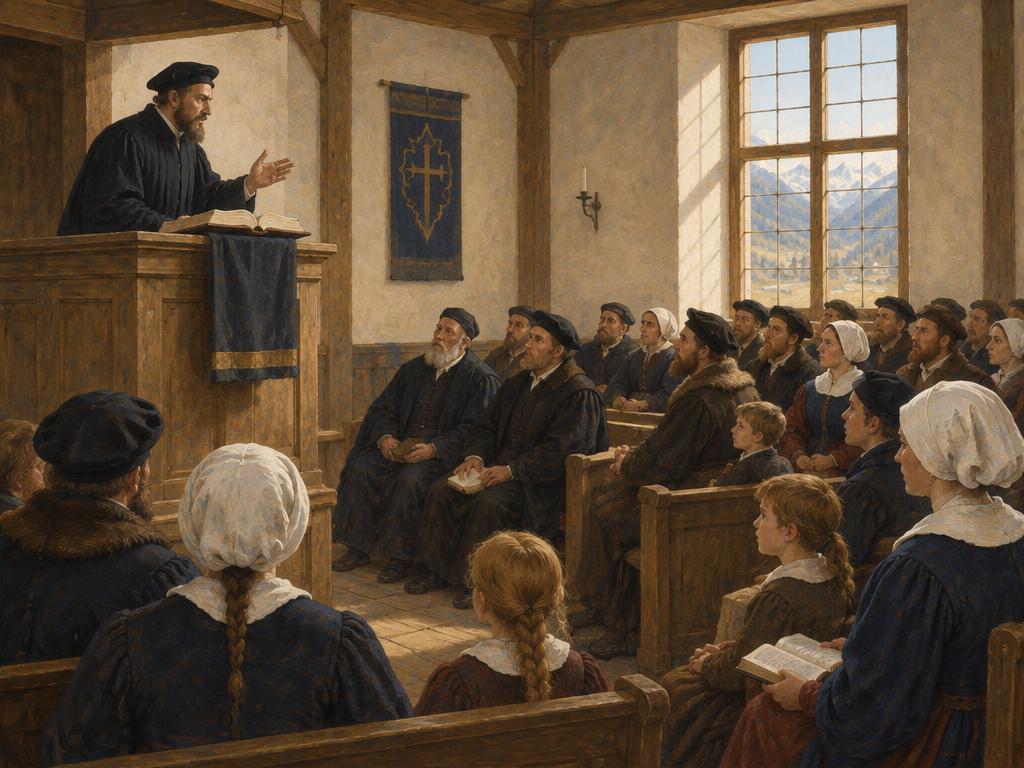
Artist's impression of a formative scene; not a documentary reconstruction.
Where the story begins
Roots and beginnings
Presbyterian and Reformed churches took shape during the sixteenth-century Reformation, especially through John Calvin's work in Geneva and John Knox's work in Scotland. They emphasized God's sovereignty, salvation by grace and scripture as the final authority for faith and life.
‘Presbyterian’ describes government by councils of elected elders; ‘Reformed’ names a wider theological family that also includes Dutch, German, Hungarian, French and other churches. Their unity comes through related confessions rather than one world leader.
Turning points
How it took shape
1536
Calvin's Institutes
John Calvin published the first edition of a systematic account of Christian faith centred on God's grace and providence. Its careful connection of belief, worship and public life shaped Reformed preaching and education.
1560
The Scottish Reformation
Under John Knox's influence, Scotland adopted a Reformed confession and elder-led government rather than bishops. Local sessions and wider presbyteries still embody that shared pattern of oversight.
1618–1619
The Synod of Dort
An international synod addressed disputes about grace, election and human response. Its canons remain important in many continental Reformed churches and underlie what later became known as the five points of Calvinism.
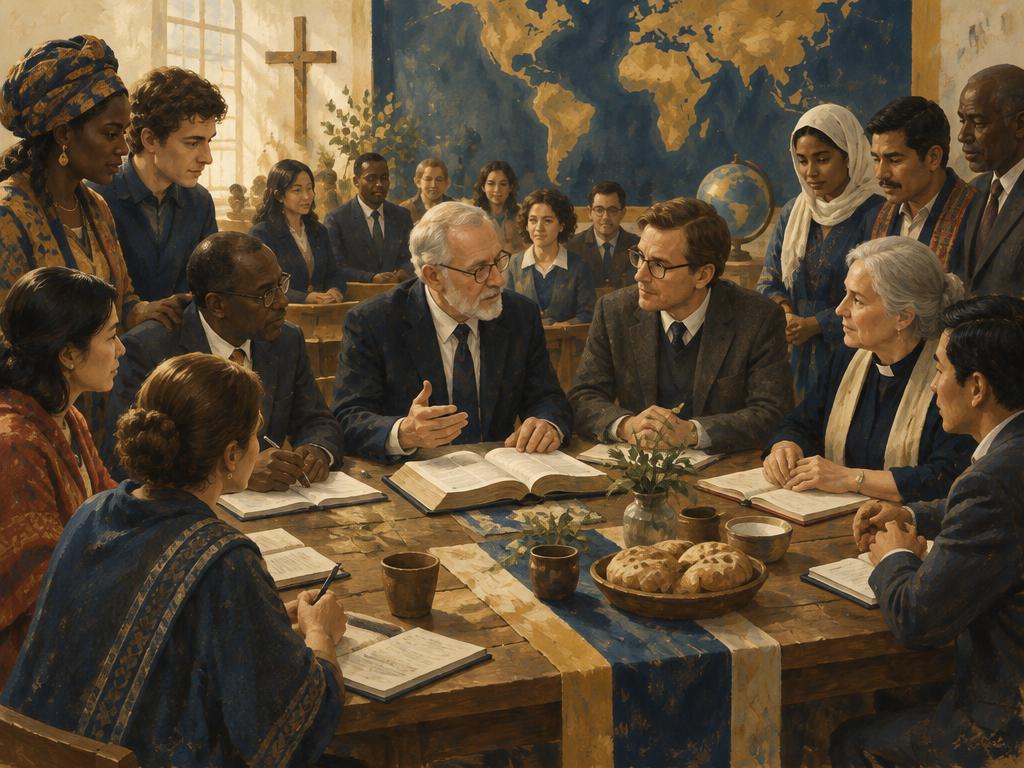
Artist's impression of a later turning point. 1646
The Westminster Confession
English and Scottish theologians produced a confession and catechisms that became standards for English-speaking Presbyterian churches. Many still use them in teaching and ordination.
19th–20th centuries
A global and divided family
Migration and mission carried Reformed churches to Africa, Asia and the Americas. Debates over scripture, worship and society created many denominations that share roots while differing in practice.
The family today
Not all one shape
No short guide can speak for every congregation. These are some of the differences within the family.
- Presbyterian churches range from progressive mainline bodies to conservative confessional bodies.
- Continental Reformed churches have liturgical and cultural histories distinct from Scottish Presbyterianism.
- Some Baptists and Congregationalists call their theology Reformed even though their church government is not presbyterian.
Shared ground
What remains in common
Across this family, scripture, salvation by grace through Christ and accountable, elder-led church life remain strong common threads.
Further reading
Sources
This is a starting map, not a complete or official account. Traditions contain many cultures, communities and disagreements.