The Pentecostal & Charismatic story
A global movement of expectant prayer, spiritual gifts and participatory worship—not a single institution.
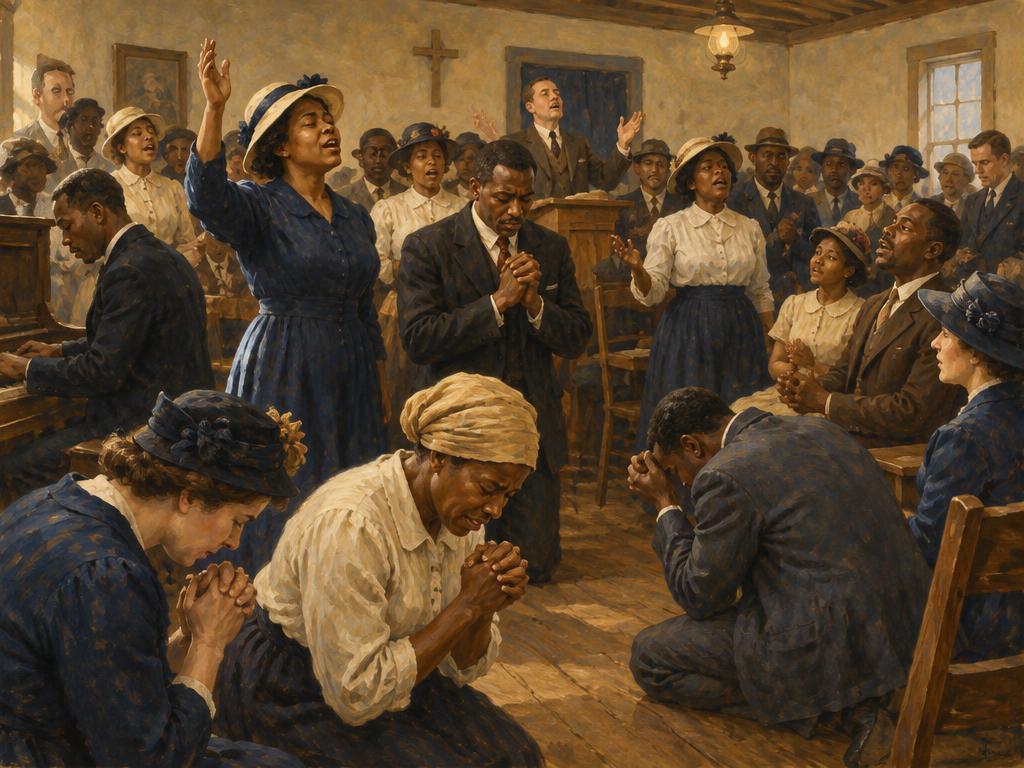
Artist's impression of a formative scene; not a documentary reconstruction.
Where the story begins
Roots and beginnings
Modern Pentecostalism grew from the American Holiness movement and teaching about baptism in the Holy Spirit. Events at Topeka in 1901 and the interracial Azusa Street revival from 1906 gave a new movement public shape and worldwide reach.
From the 1960s, charismatic renewal brought similar practices into Catholic, Anglican and other churches without asking people to become Pentecostal. Pentecostal and Charismatic therefore name overlapping movements, not one denomination.
Turning points
How it took shape
1901
The Topeka outpouring
At Charles Parham's Bible school, Agnes Ozman reportedly spoke in tongues during prayer for Spirit baptism. Parham's interpretation of tongues as initial evidence became influential in classical Pentecostal teaching.
1906–1915
Azusa Street
William Seymour led a Los Angeles revival marked by testimony, healing, tongues and unusually integrated worship. Visitors carried its message around the world, making Azusa Pentecostalism's symbolic birthplace.
1914
The Assemblies of God
Independent ministers formed a fellowship for mission and mutual order. Its mix of shared credentials and local energy became one model for a growing global movement.
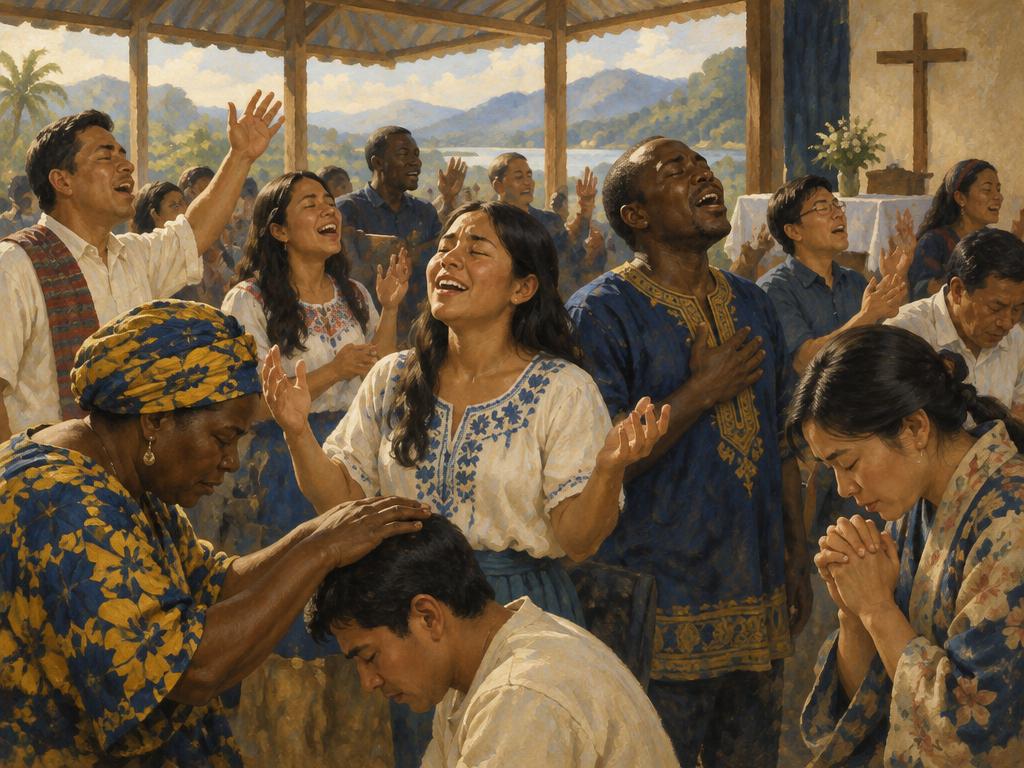
Artist's impression of a later turning point. 1960s
Charismatic renewal
Pentecostal gifts appeared within established Protestant and Catholic churches. ‘Charismatic’ increasingly described a spirituality that could be lived without changing denomination.
1980s–present
Many waves, many nations
Independent networks and extraordinary growth in Africa, Asia and Latin America made Spirit-filled Christianity highly diverse. This also brought difficult debates about authority, prosperity teaching and accountability.
The family today
Not all one shape
No short guide can speak for every congregation. These are some of the differences within the family.
- Classical Pentecostal denominations and charismatic renewal within older churches are related but distinct.
- Trinitarian Pentecostals differ from Oneness Pentecostals, whose understanding of God and baptism is different.
- Churches vary widely over tongues, prophecy and healing; not all regard tongues as necessary evidence of Spirit baptism.
Shared ground
What remains in common
Pentecostal and Charismatic Christians broadly share confidence in the Holy Spirit's present activity, expectant prayer and worship in which the congregation actively participates.
Further reading
Sources
This is a starting map, not a complete or official account. Traditions contain many cultures, communities and disagreements.