The Orthodox story
An ancient communion shaped by the councils, the liturgy and the Christian East.
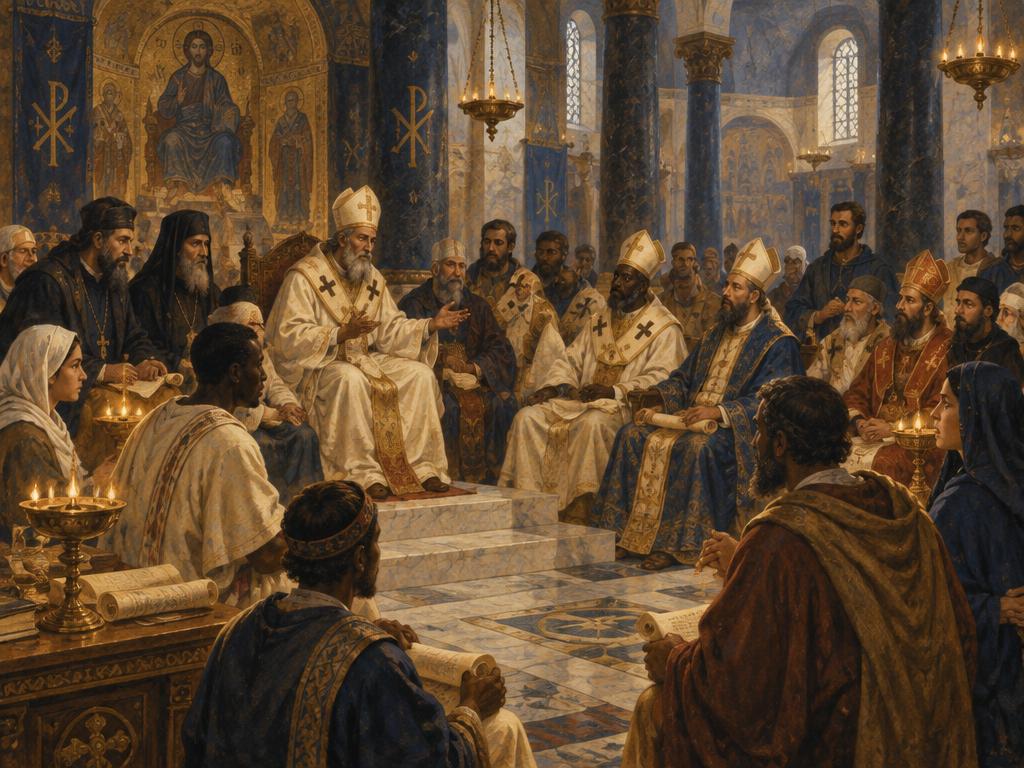
Artist's impression of a formative scene; not a documentary reconstruction.
Where the story begins
Roots and beginnings
The Eastern Orthodox Church understands itself as the continuation of the apostolic church as it grew through the Greek-speaking eastern Mediterranean. Its theology and worship were shaped by the early councils, the church fathers and the life of the Byzantine world.
Orthodoxy has no single equivalent of the Pope. It is a communion of self-governing churches—Greek, Antiochian, Russian, Romanian, Serbian and others—held together by shared faith, sacraments and liturgy.
Turning points
How it took shape
1st century
Churches across the East
Apostolic missions established communities across Asia Minor, Greece and the Middle East. Orthodox churches trace their episcopal life to these beginnings, and their worship preserves language and gestures formed in the early centuries.
325–787
Seven ecumenical councils
The councils defined teaching about the Trinity and Christ, and eventually defended the place of icons. Their decisions still structure Orthodox belief, the creed and the visual world of Orthodox worship.
988
The baptism of Kievan Rus'
Prince Vladimir's adoption of Byzantine Christianity carried Orthodoxy deeply into the Slavic world. It helps explain the tradition's enduring cultural presence in Ukraine, Russia and neighbouring lands.
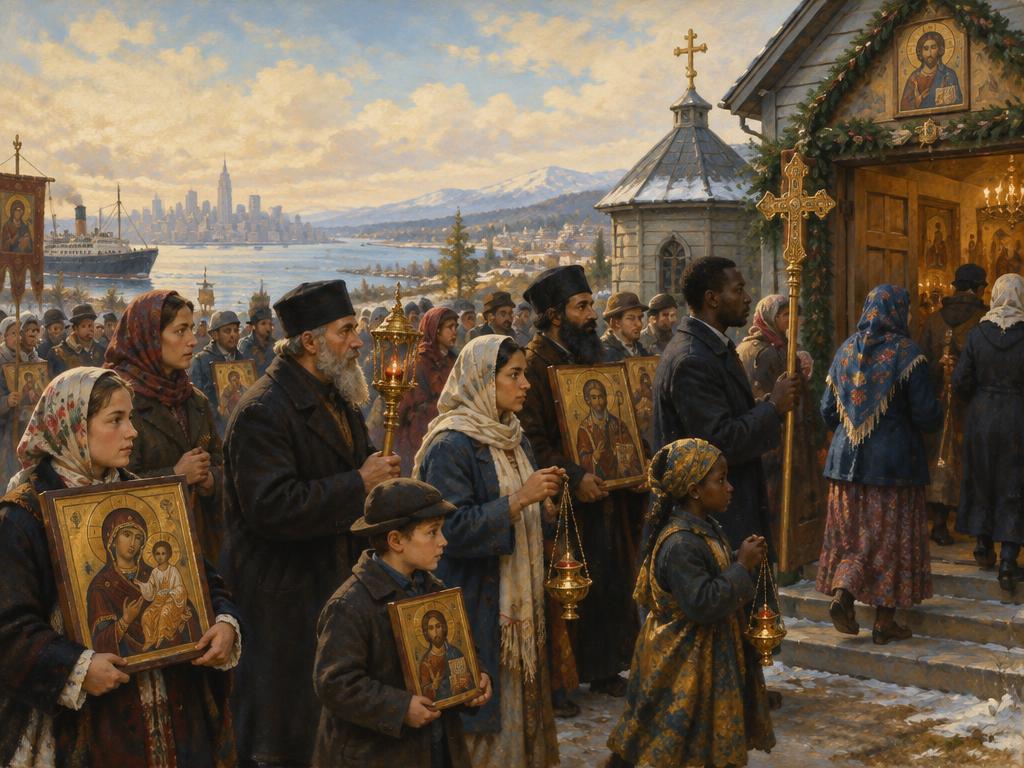
Artist's impression of a later turning point. 1054
Separation from Rome
Disputes about papal authority, the creed and custom came to symbolize a widening separation between Eastern and Western churches. Orthodoxy retained a conciliar pattern: bishops together, rather than one universal jurisdiction.
1453
After Constantinople
When Constantinople fell to the Ottomans, Orthodox life continued without Byzantine political power. Authority became more visibly distributed among national and regional churches, the pattern seen today.
The family today
Not all one shape
No short guide can speak for every congregation. These are some of the differences within the family.
- Autocephalous churches share doctrine while carrying distinct languages, calendars and national histories.
- Oriental Orthodox churches—including Coptic, Armenian and Syriac churches—are ancient relatives but a distinct communion.
- Questions of territory and independence can create real tensions, as recent disputes concerning Ukraine have shown.
Shared ground
What remains in common
Orthodox Christians share the Trinity, the Nicene Creed, scripture and the saving significance of Christ's resurrection with the wider Christian family.
Further reading
Sources
This is a starting map, not a complete or official account. Traditions contain many cultures, communities and disagreements.