The Methodist story
A movement of disciplined prayer, experienced grace and practical holiness born within Anglicanism.
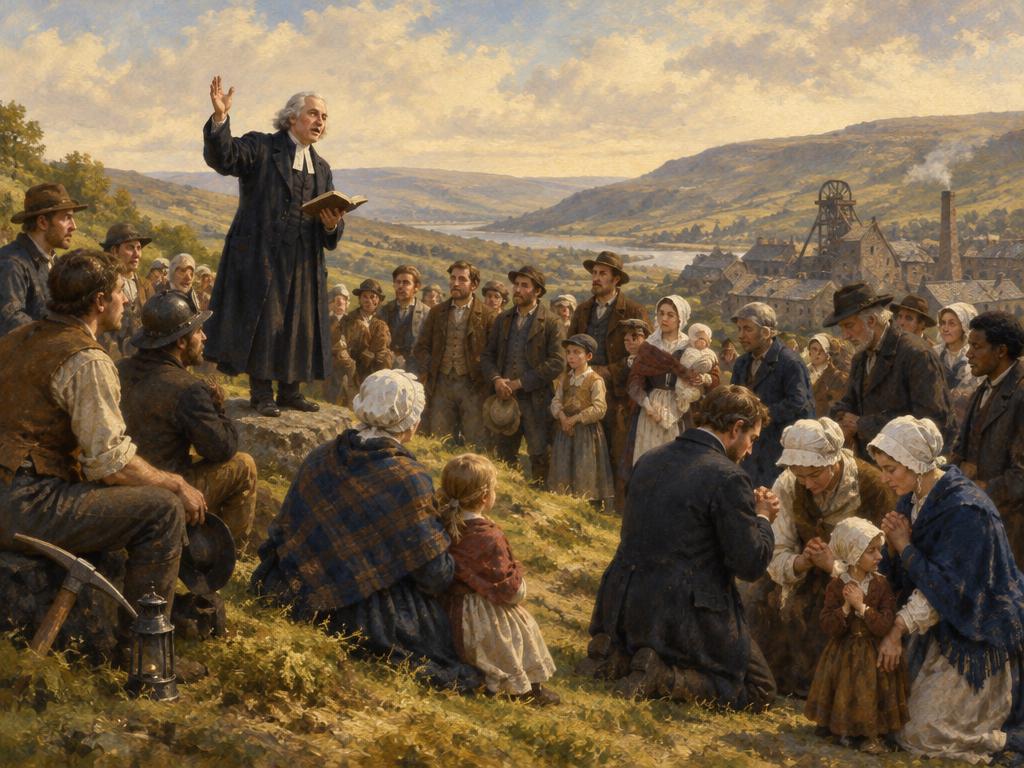
Artist's impression of a formative scene; not a documentary reconstruction.
Where the story begins
Roots and beginnings
Methodism began as an eighteenth-century renewal movement within the Church of England. John and Charles Wesley and their friends followed a deliberate rhythm of prayer, Bible study, communion and service; critics called them ‘Methodists’.
John Wesley's preaching and network of small groups reached people beyond ordinary parish life. He did not initially intend to found a separate church, but organization, mission and the needs of Methodists in post-revolutionary America gradually produced one.
Turning points
How it took shape
1729
The Holy Club
The Wesleys' Oxford group joined disciplined devotion to visiting prisoners and helping the poor. That union of personal and social holiness still marks Methodist discipleship.
1738
A heart strangely warmed
At Aldersgate Street, Wesley experienced an assurance that Christ had forgiven him. Methodism would place unusual warmth on experienced grace without treating feeling as the whole of faith.
1739–1740s
The fields become a church
Wesley and George Whitefield preached outdoors to miners and working communities. Societies and class meetings then gave converts friendship, accountability and a practical rule of life.
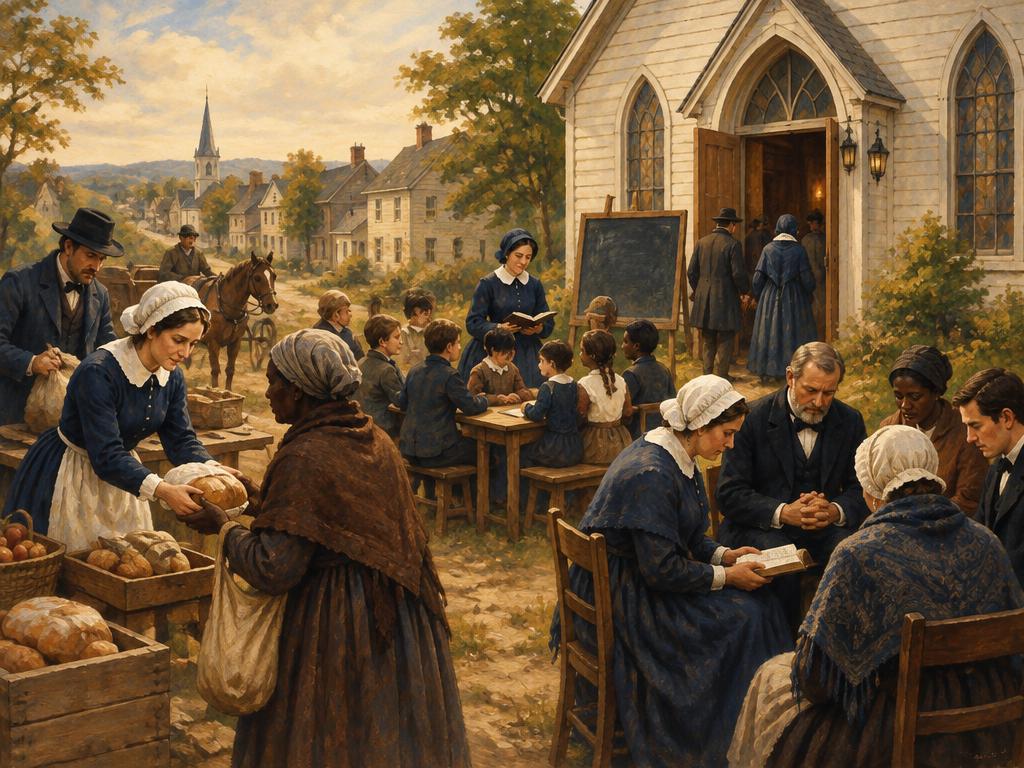
Artist's impression of a later turning point. 1784
The Christmas Conference
American Methodists formed the Methodist Episcopal Church and appointed leaders for their new setting. Connectional oversight—local churches joined in conferences—became characteristic.
1968 and after
Union and fresh division
The United Methodist Church formed through a major merger. More recent separations over theology and inclusion show a large family still negotiating how shared Wesleyan roots are lived out.
The family today
Not all one shape
No short guide can speak for every congregation. These are some of the differences within the family.
- The Methodist family includes United, African Methodist Episcopal, Free Methodist, Wesleyan and other churches.
- Some historically Black Methodist bodies arose because white churches excluded Black Christians from equal fellowship and leadership.
- Traditional liturgy, revival-style preaching and contemporary worship all exist within the family.
Shared ground
What remains in common
Methodists share Christian belief in the Trinity, scripture, baptism and communion, with a special emphasis on grace that transforms both personal and public life.
Further reading
Sources
This is a starting map, not a complete or official account. Traditions contain many cultures, communities and disagreements.