The Lutheran story
A reform of grace, scripture and worship that reshaped northern Europe and travelled far beyond it.
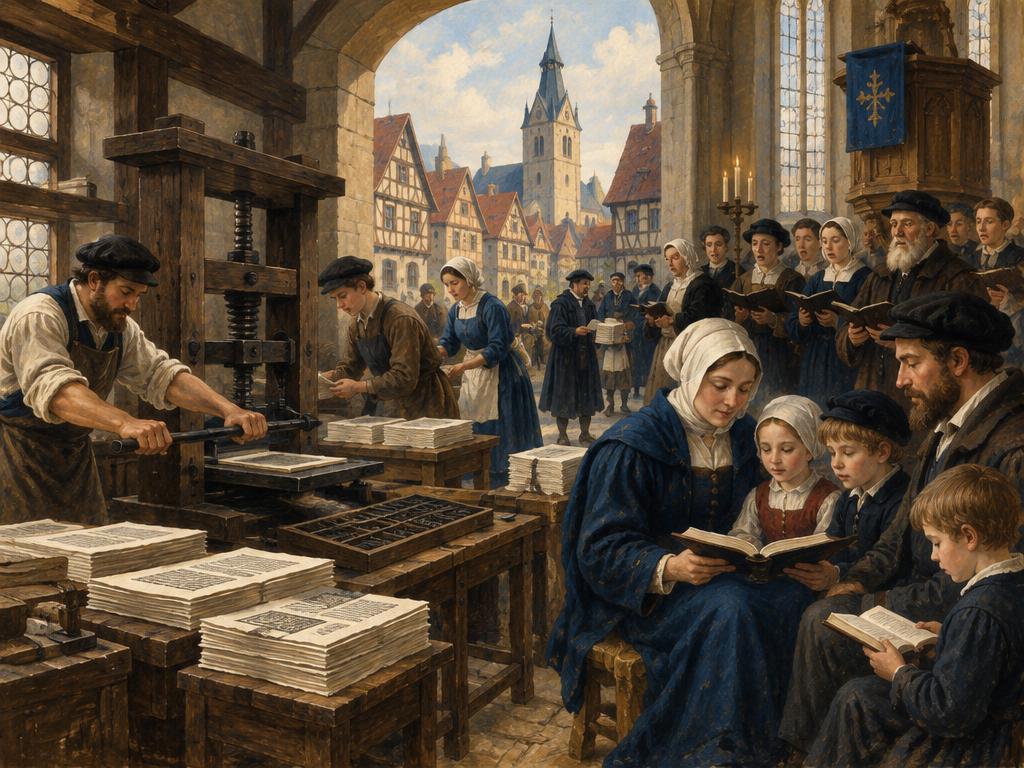
Artist's impression of a formative scene; not a documentary reconstruction.
Where the story begins
Roots and beginnings
Lutheranism began in the reforming work of Martin Luther, a German monk and teacher. His protest against indulgences opened a larger argument about grace, church authority and how a person is made right with God.
Lutheran churches formed across German and Scandinavian lands around shared confessions rather than one central leader. They retained a strongly liturgical and sacramental life while insisting that salvation is God's gift, received through faith.
Turning points
How it took shape
1517
The Ninety-Five Theses
Luther circulated arguments against the sale of indulgences. Printing turned an academic dispute into a public movement, now remembered each Reformation Day.
1521
The Diet of Worms
Called before imperial authorities, Luther refused to withdraw writings unless persuaded by scripture and reason. The encounter became a lasting image of conscience bound to the Word of God.
1522–1534
The Bible in German
Luther's New Testament and then full Bible gave ordinary households scripture in vivid vernacular language. Accessible Bible reading, preaching and catechesis remain Lutheran hallmarks.
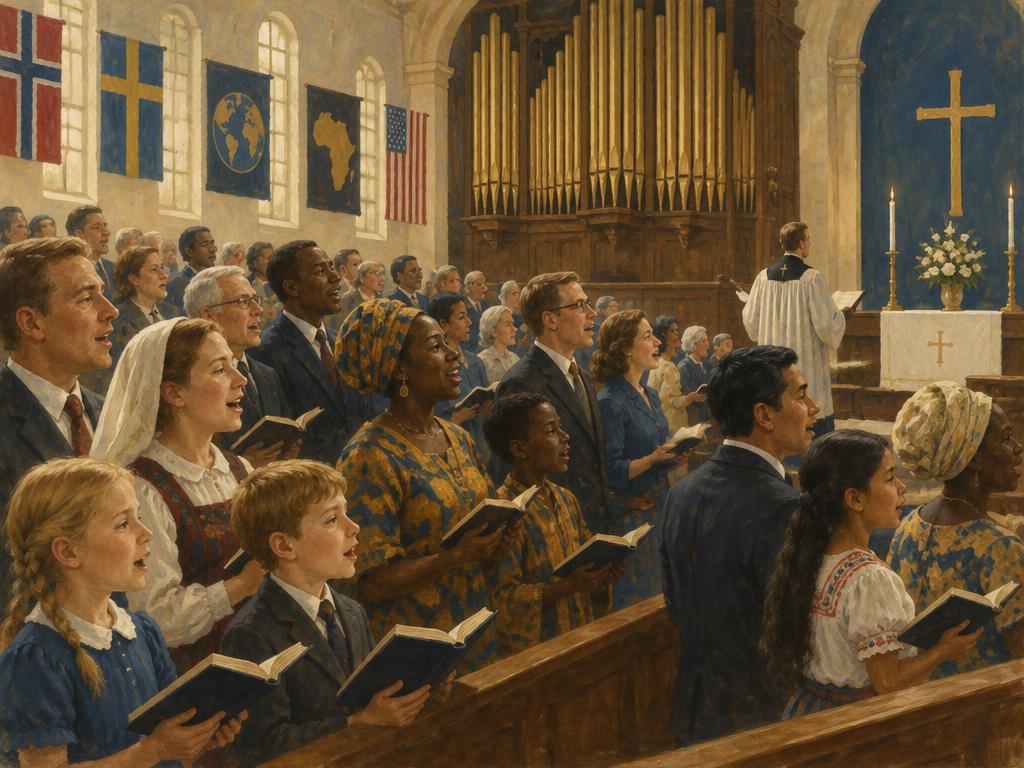
Artist's impression of a later turning point. 1530
The Augsburg Confession
Philip Melanchthon presented a measured account of Lutheran belief, arguing for reform while claiming continuity with the historic church. It remains the principal Lutheran confession.
1580
The Book of Concord
A collection of confessions, including Luther's catechisms, gave the movement a stable doctrinal centre. Lutheran pastors and churches still use it to explain their shared identity.
The family today
Not all one shape
No short guide can speak for every congregation. These are some of the differences within the family.
- Lutheran churches range from strongly confessional bodies to more progressive national and mainline churches.
- Worship may be richly ceremonial or simpler, but Word and sacrament commonly remain central.
- Different national histories give Nordic, German, African, Asian and American Lutheranism distinct voices.
Shared ground
What remains in common
Lutherans share the Trinity, scripture and baptism with the wider church; their teaching on grace also deeply influenced later Protestant traditions.
Further reading
Sources
This is a starting map, not a complete or official account. Traditions contain many cultures, communities and disagreements.