The Evangelical & non-denominational story
Revival, conversion, scripture and mission across a movement that has never been one church.
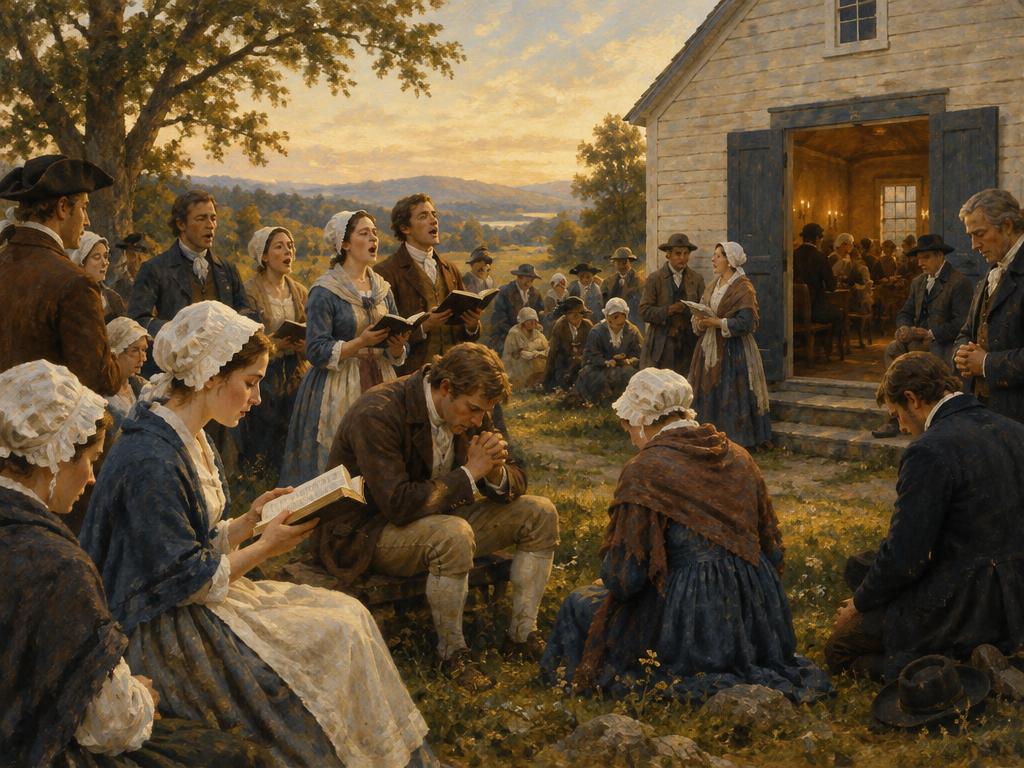
Artist's impression of a formative scene; not a documentary reconstruction.
Where the story begins
Roots and beginnings
Evangelicalism is a movement within and across denominations, with strong roots in the eighteenth-century revivals of Britain and North America. It emphasizes personal conversion, biblical authority, Christ's saving work and active witness.
Non-denominational churches are related but not identical. They became especially visible in the twentieth century as congregations chose local independence and fewer inherited labels, often while retaining broadly evangelical beliefs.
Turning points
How it took shape
1730s–1740s
The First Great Awakening
Travelling preachers called people to new birth and heartfelt faith across denominational borders. Conversion and direct, persuasive preaching became durable evangelical instincts.
1790s–1840s
The Second Great Awakening
Camp meetings and new evangelistic methods spread across the American frontier. Mission societies, Bible societies and reform campaigns expressed the conviction that faith should move outward.
1940s
Neo-evangelical cooperation
New institutions sought a path between fundamentalist withdrawal and liberal Protestantism. Networks, seminaries and Billy Graham's ministry helped form a recognizable modern evangelical identity.
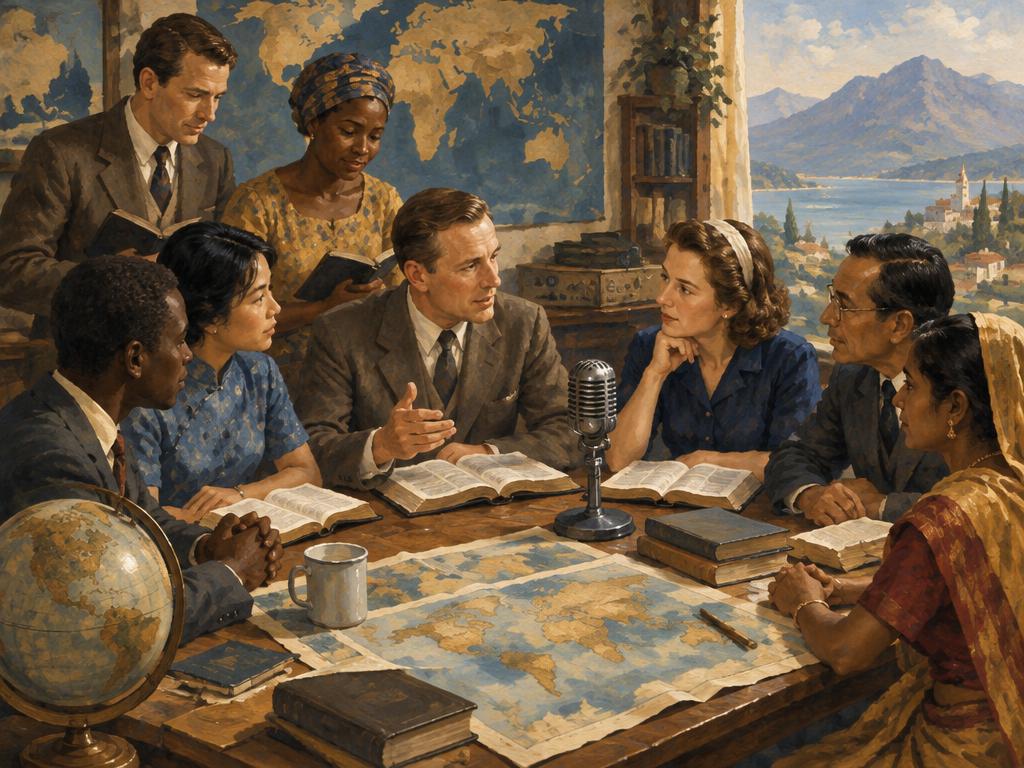
Artist's impression of a later turning point. 1960s–1970s
The Jesus Movement
Young converts brought informal gatherings, contemporary music and a mistrust of inherited labels. Many later non-denominational churches carry this visual and musical inheritance.
1980s–present
Churches and networks
Independent congregations and church-planting networks grew without a common governing body. Their flexibility encourages local initiative but also means the label alone reveals little about oversight or detailed belief.
The family today
Not all one shape
No short guide can speak for every congregation. These are some of the differences within the family.
- Evangelicals live inside Baptist, Anglican, Methodist, Presbyterian, Pentecostal and many other churches; evangelicalism is not one institution.
- Non-denominational churches may resemble Baptist, charismatic or Reformed congregations despite avoiding those names.
- Global evangelical Christianity is culturally and theologically broader than its highly visible American forms.
Shared ground
What remains in common
Evangelicals and many non-denominational Christians commonly emphasize scripture, personal trust in Jesus and sharing faith through witness and service.
Further reading
Sources
This is a starting map, not a complete or official account. Traditions contain many cultures, communities and disagreements.