The Catholic story
From the apostolic church to a worldwide communion centred on sacrament, tradition and the bishop of Rome.
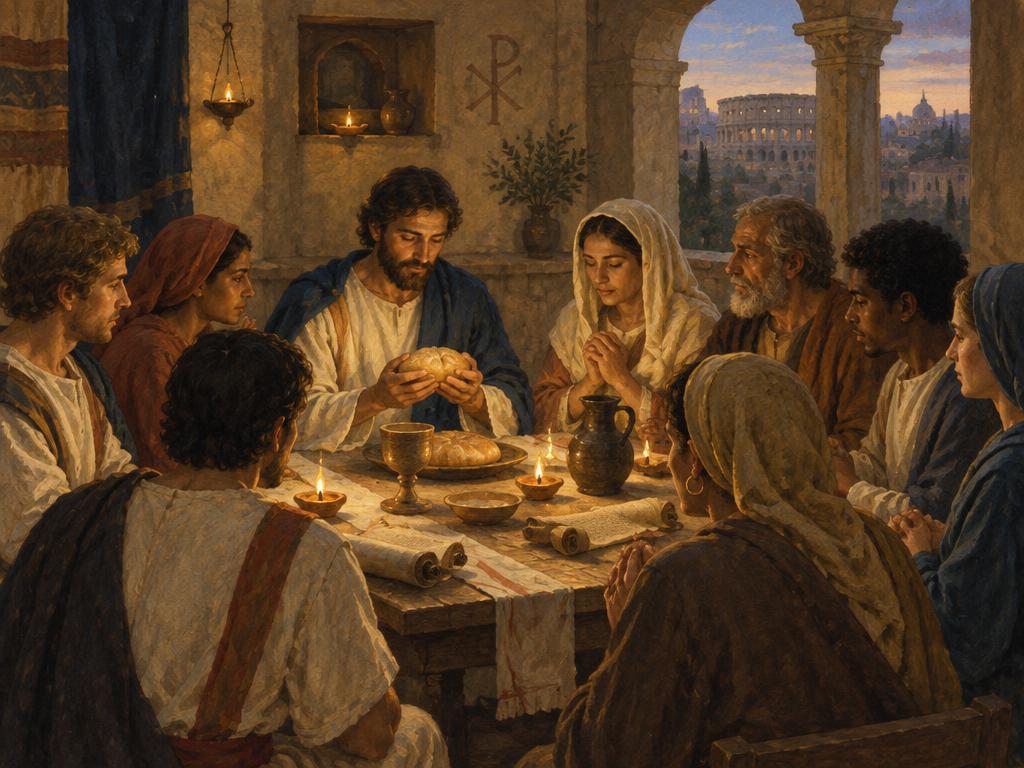
Artist's impression of a formative scene; not a documentary reconstruction.
Where the story begins
Roots and beginnings
The Catholic Church understands itself as continuous with the community formed around Jesus and the apostles in the first century. It gives particular weight to Peter and to the church at Rome, where ancient tradition says Peter and Paul were martyred.
Over many centuries the Western church developed a distinctive pattern of bishops, sacramental worship and papal leadership. ‘Catholic’ now includes the large Latin Church and 23 Eastern Catholic Churches, each with its own liturgy and customs while remaining in communion with Rome.
Turning points
How it took shape
c. 30–33
Apostolic beginnings
Catholic tradition sees Christ's commissioning of Peter and the apostles as the beginning of its ministry. That conviction lives on in apostolic succession: bishops are ordained within a continuous, received ministry rather than appointed as isolated leaders.
325 & 381
The great councils
Nicaea and Constantinople gave the church the language of the Nicene Creed. Catholics still say it at Mass, sharing this foundational account of the Trinity and Christ with Orthodox Christians and many Protestants.
1054
East and West separate
Long tensions over papal authority, theology and custom culminated in mutual excommunications between Rome and Constantinople. The date is a marker rather than one clean break; Catholic and Orthodox churches still share much ancient faith and sacramental life.
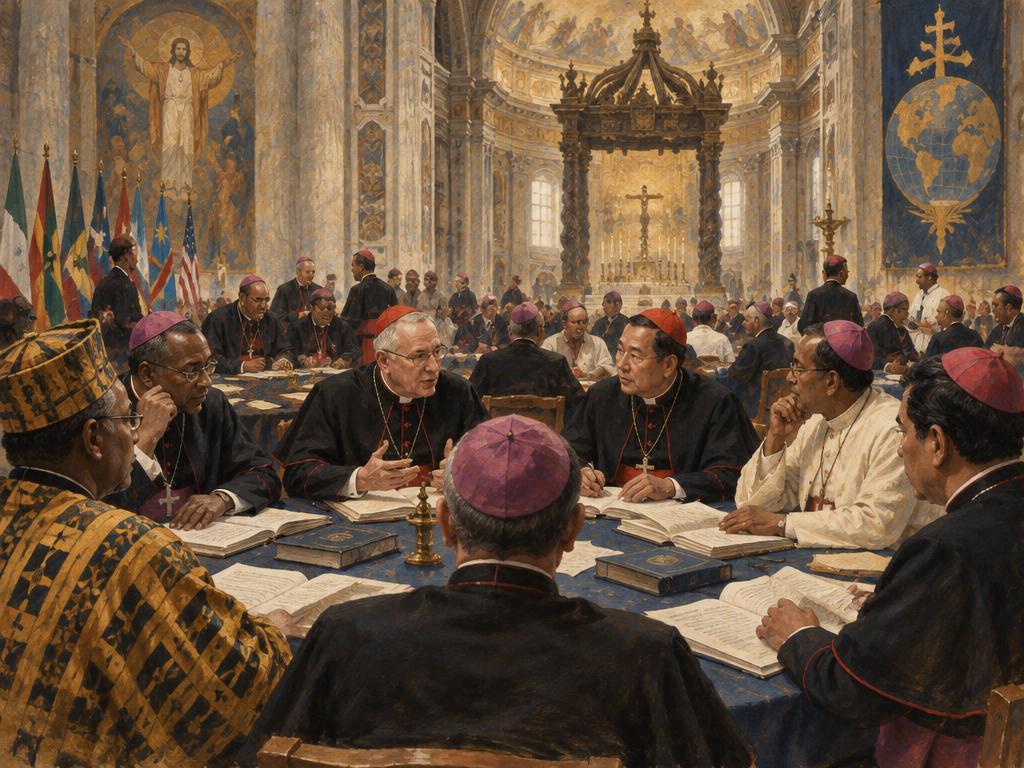
Artist's impression of a later turning point. 1545–1563
The Council of Trent
In response to the Reformation, Trent clarified Catholic teaching on grace, scripture and tradition, and the sacraments. It also reformed clergy education and brought greater consistency to Latin worship.
1962–1965
The Second Vatican Council
Vatican II encouraged worship in local languages, a fuller role for lay people, and renewed dialogue with other Christians and faiths. Its reforms explain much of what a visitor experiences at an ordinary Catholic Mass today.
The family today
Not all one shape
No short guide can speak for every congregation. These are some of the differences within the family.
- The Latin Church lives alongside Eastern Catholic churches such as the Maronite and Ukrainian Greek Catholic churches, whose worship and disciplines can look very different.
- Religious orders—including Benedictines, Franciscans, Dominicans and Jesuits—carry distinct ways of prayer and service.
- Catholics also differ over liturgical style and how tradition should respond to modern life; no single parish represents the whole church.
Shared ground
What remains in common
Catholics share the Nicene Creed, scripture, baptism and faith in Christ's death and resurrection with Christians across many other traditions.
Further reading
Sources
This is a starting map, not a complete or official account. Traditions contain many cultures, communities and disagreements.