The Baptist story
Believers' baptism, freedom of conscience and local churches choosing to walk together.
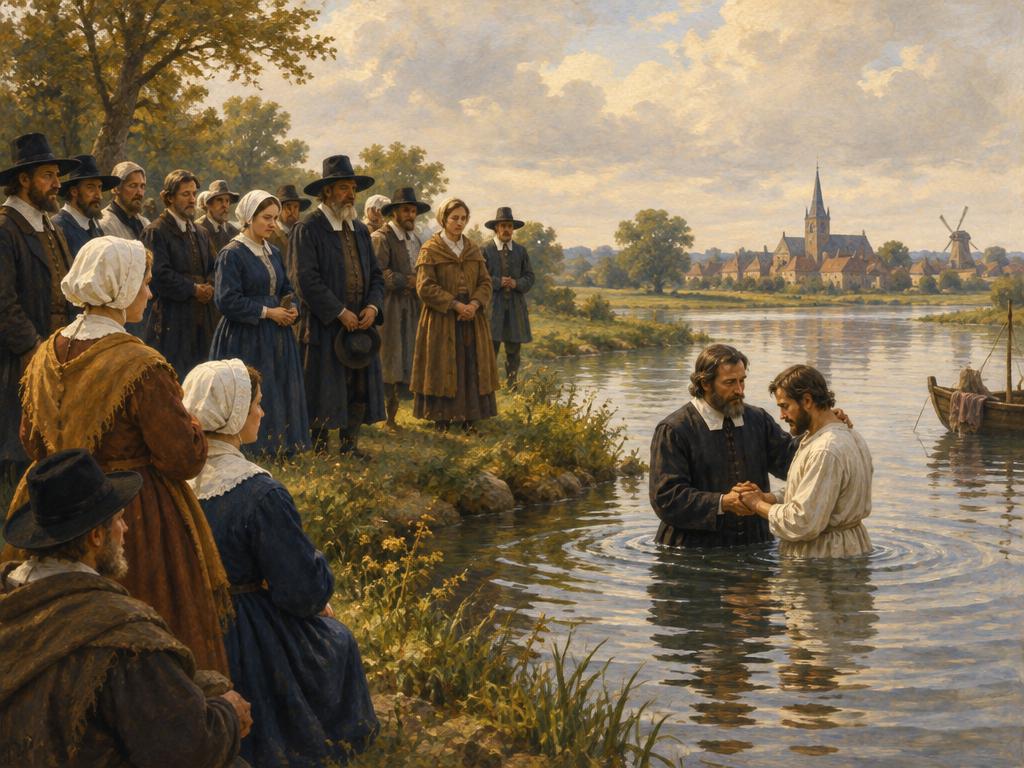
Artist's impression of a formative scene; not a documentary reconstruction.
Where the story begins
Roots and beginnings
Baptists emerged among English Separatists in the early seventeenth century. John Smyth and Thomas Helwys came to believe that baptism should follow a person's own confession of faith rather than be given in infancy.
From the beginning there were different Baptist streams, including General and Particular Baptists. What held them together was not one hierarchy but convictions about scripture, believers' baptism, the local congregation and liberty of conscience.
Turning points
How it took shape
1609
A believers' church in Amsterdam
John Smyth and fellow exiles rejected infant baptism and formed the first congregation usually identified as Baptist. Baptism after personal faith became the family's defining public act.
1612
Thomas Helwys returns
Helwys established a Baptist church in England and argued that religious liberty should extend to everyone, not only his own community. Freedom of conscience remains a major Baptist inheritance.
1638–1639
A church in Rhode Island
Roger Williams helped establish a Baptist congregation in Providence after resisting religious coercion in Massachusetts. The colony became an early experiment in broad religious liberty.
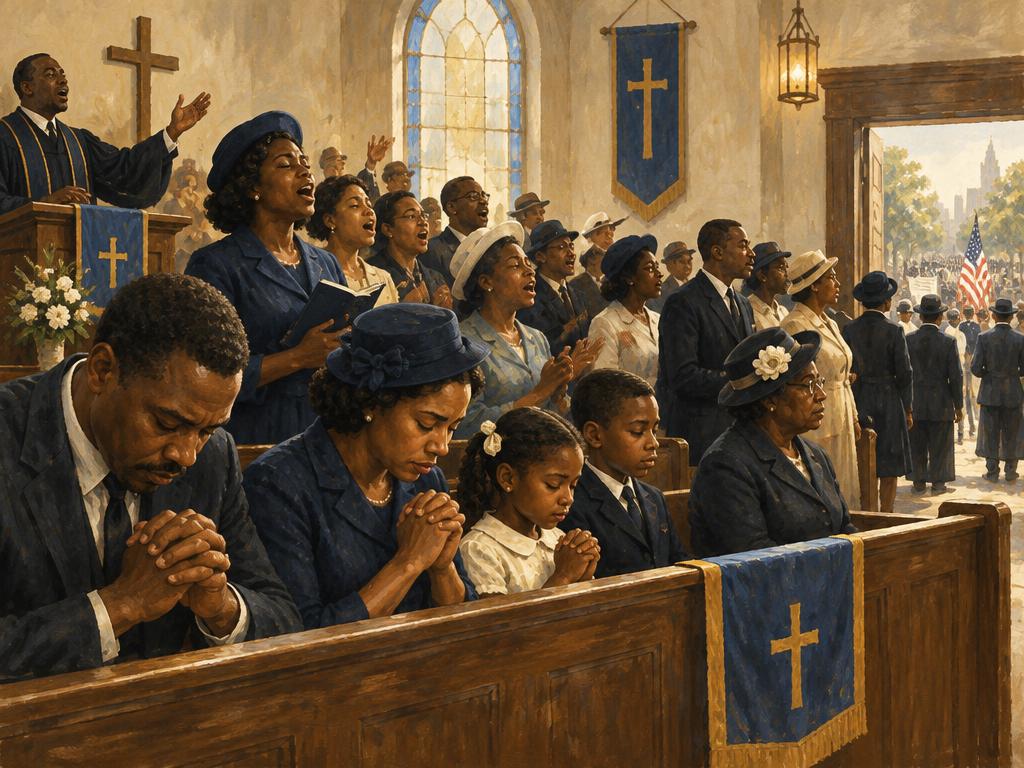
Artist's impression of a later turning point. 1707–1814
Cooperation without control
Associations and mission conventions let autonomous churches work together without creating a governing hierarchy. That balance still shapes Baptist conventions and unions.
1845
The Southern Baptist Convention
Southern Baptists separated from northern mission bodies over whether slaveholders could be missionaries. The convention has since formally repented of racism, while this origin continues to inform honest conversations about its history.
The family today
Not all one shape
No short guide can speak for every congregation. These are some of the differences within the family.
- General and Particular Baptist inheritances still appear in differing views of grace and election.
- Historically Black, mainline, conservative and independent Baptist communities carry distinct histories and emphases.
- Local autonomy means leadership, communion and worship can vary greatly even within one convention.
Shared ground
What remains in common
Baptists broadly share believers' baptism, scriptural authority, congregational responsibility and a historic concern for religious liberty.
Further reading
Sources
This is a starting map, not a complete or official account. Traditions contain many cultures, communities and disagreements.