The Anglican & Episcopal story
An English reformation, a prayer book, and a global family holding old and new together.
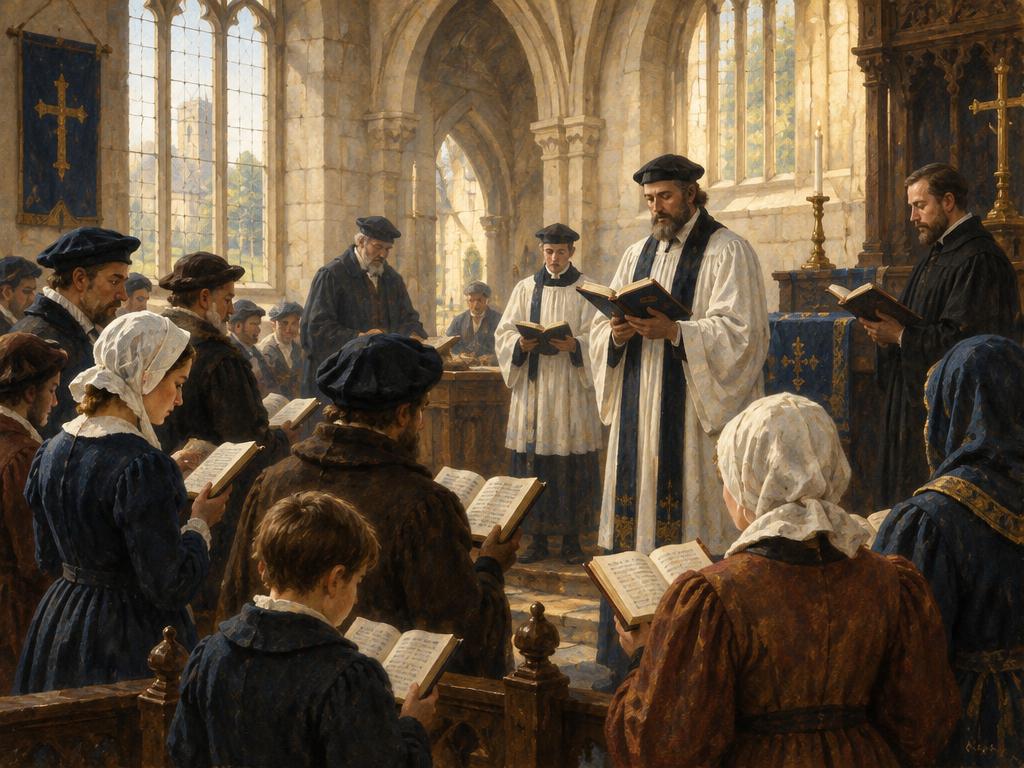
Artist's impression of a formative scene; not a documentary reconstruction.
Where the story begins
Roots and beginnings
Christianity in Britain long predates Anglicanism. A distinct Church of England emerged in the 1530s when Henry VIII and Parliament rejected papal jurisdiction, initially retaining much of the church's inherited worship and structure.
Reformers then gave it a more Protestant theology, especially through the Book of Common Prayer. Episcopal churches are Anglican churches in places—including the United States—where the name reflects government by bishops rather than a link to England.
Turning points
How it took shape
1534
The Act of Supremacy
Parliament separated the English church from papal jurisdiction and recognized royal supremacy. Political motives and religious reform became intertwined, making Anglican origins more complicated than a single theological dispute.
1549–1662
The Book of Common Prayer
Thomas Cranmer's prayer book put a reformed liturgy into memorable English. Later revisions became a common grammar of daily prayer, communion, marriage and burial across Anglican life.
1563
The Thirty-Nine Articles
The Articles joined Reformation convictions about scripture and grace to episcopal government and sacramental worship. They remain a historic reference, though Anglican provinces use them with differing weight.
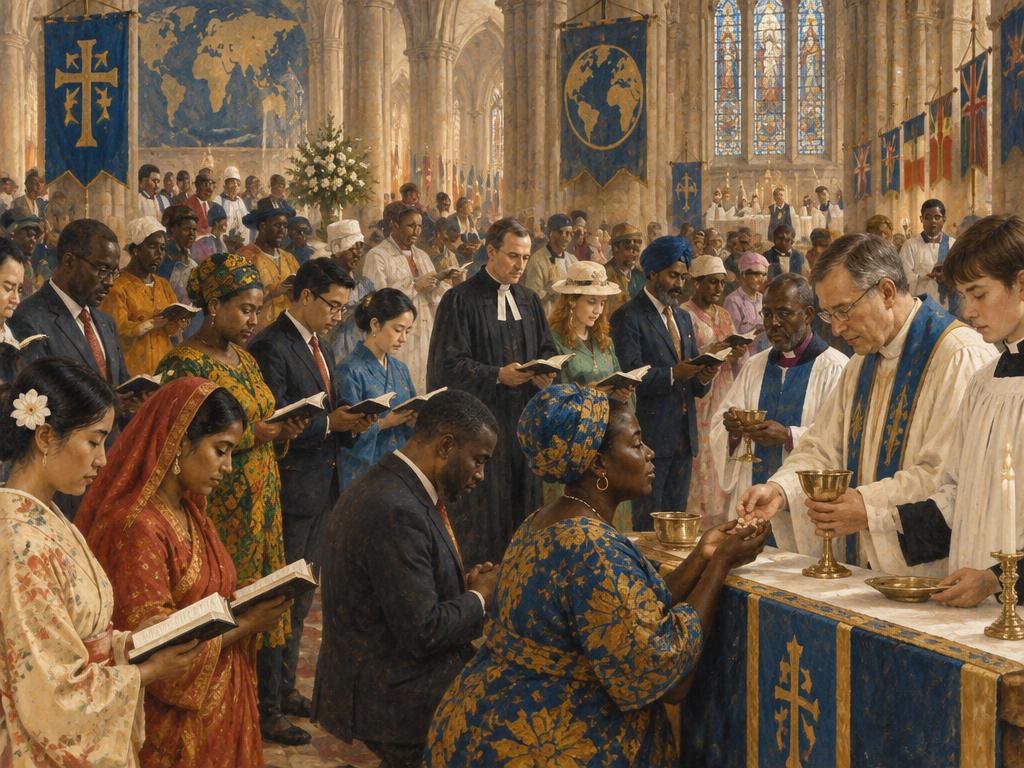
Artist's impression of a later turning point. 1789
The Episcopal Church
After American independence, Anglicans in the new nation organized without allegiance to the English crown. Their church kept bishops and prayer-book worship while adapting both to a new setting.
1867–present
A worldwide communion
The Lambeth Conference brought bishops from growing national churches together for counsel rather than binding rule. That loose fellowship helps explain both Anglican breadth and its present disagreements.
The family today
Not all one shape
No short guide can speak for every congregation. These are some of the differences within the family.
- Anglo-Catholic, broad-church and evangelical parishes can feel markedly different while sharing an Anglican inheritance.
- National provinces make many decisions for themselves, including decisions about ordination, marriage and liturgy.
- ‘Anglican’ and ‘Episcopal’ usually name the same wider family; local history determines which word is used.
Shared ground
What remains in common
Anglicans share the creeds, baptism, Eucharist and a scriptural and liturgical inheritance with Catholic, Orthodox and many Protestant Christians.
Further reading
Sources
This is a starting map, not a complete or official account. Traditions contain many cultures, communities and disagreements.